Where we came from. What we believe.
The history, the lineage, the manifesto, and the lines we draw. This is everything that defines the Movement — the traditions it honors, the worldview it holds, and the things it refuses to do.
Origin & Lineage
Where this comes from
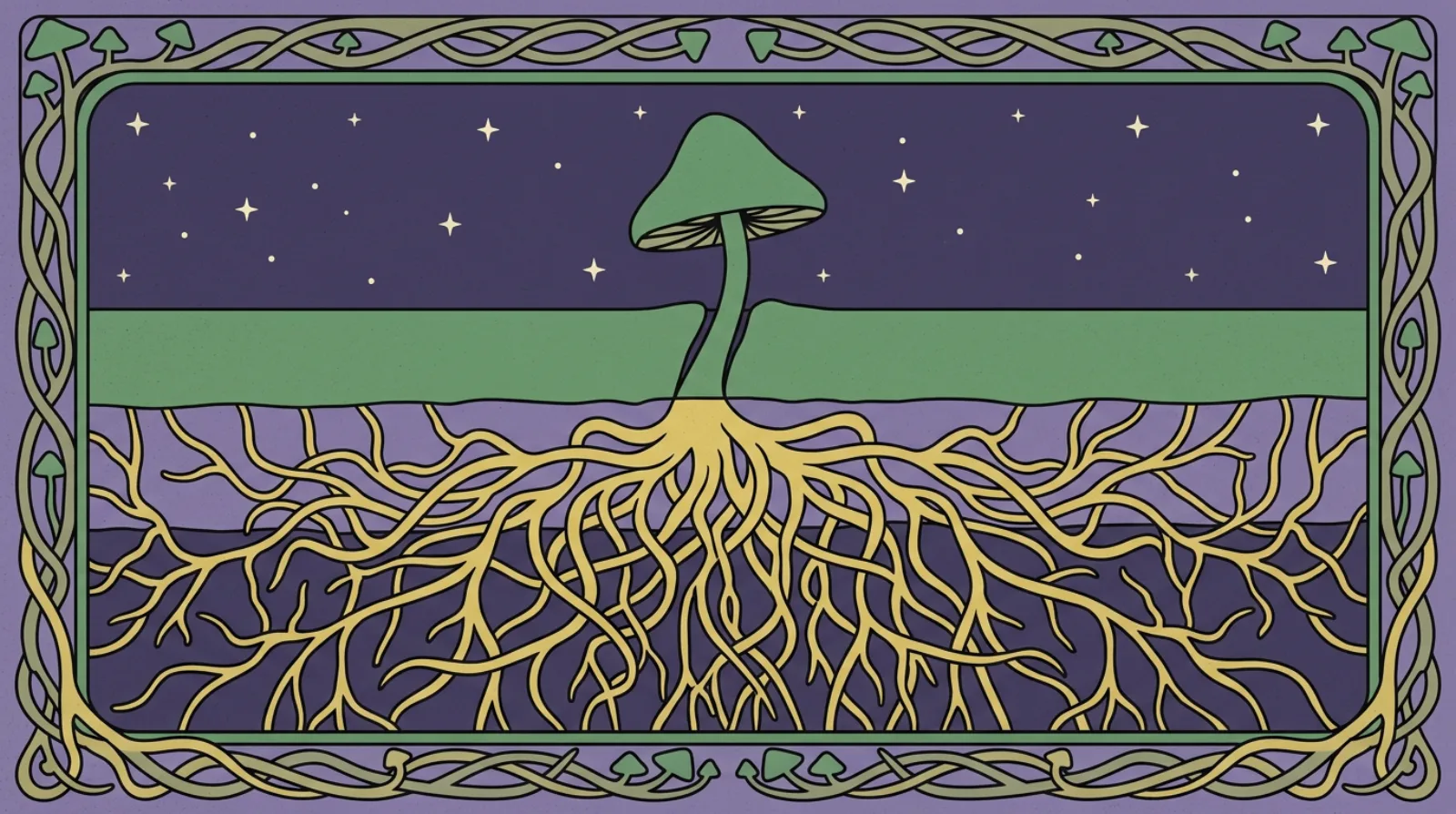
A Brief History of Microdosing: From Stoned Apes to the Modern Revival
The long story of how humans came to know about psilocybin mushrooms — from prehistoric ritual use through the 1960s research era and the modern microdosing revival.
Read →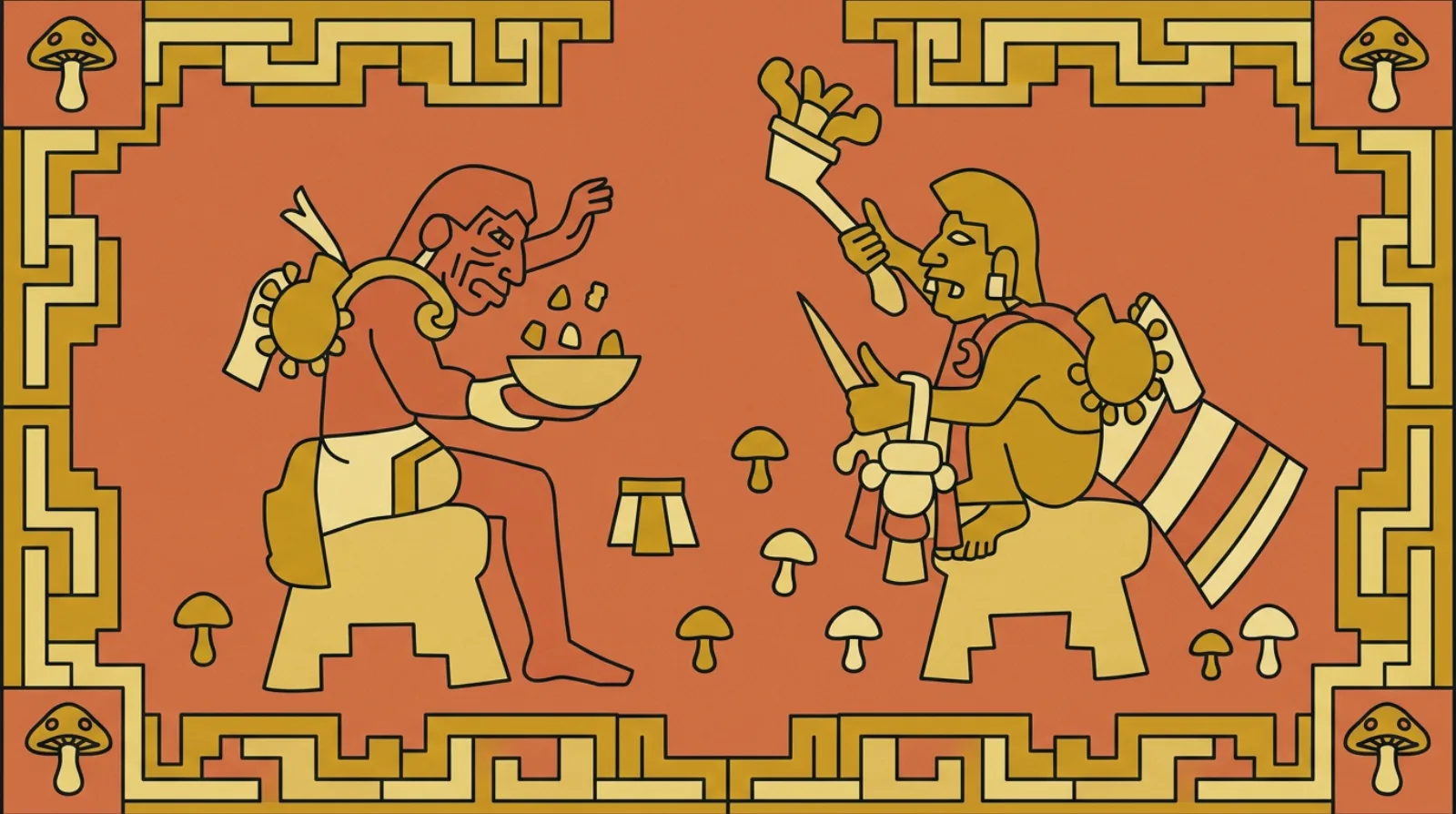
Indigenous Wisdom and the Modern Practice: What We Owe the People Who Came Before
An honest look at what the modern microdosing practice owes to the indigenous traditions that kept this knowledge alive — and how to engage with the medicine without extracting from it.
Read →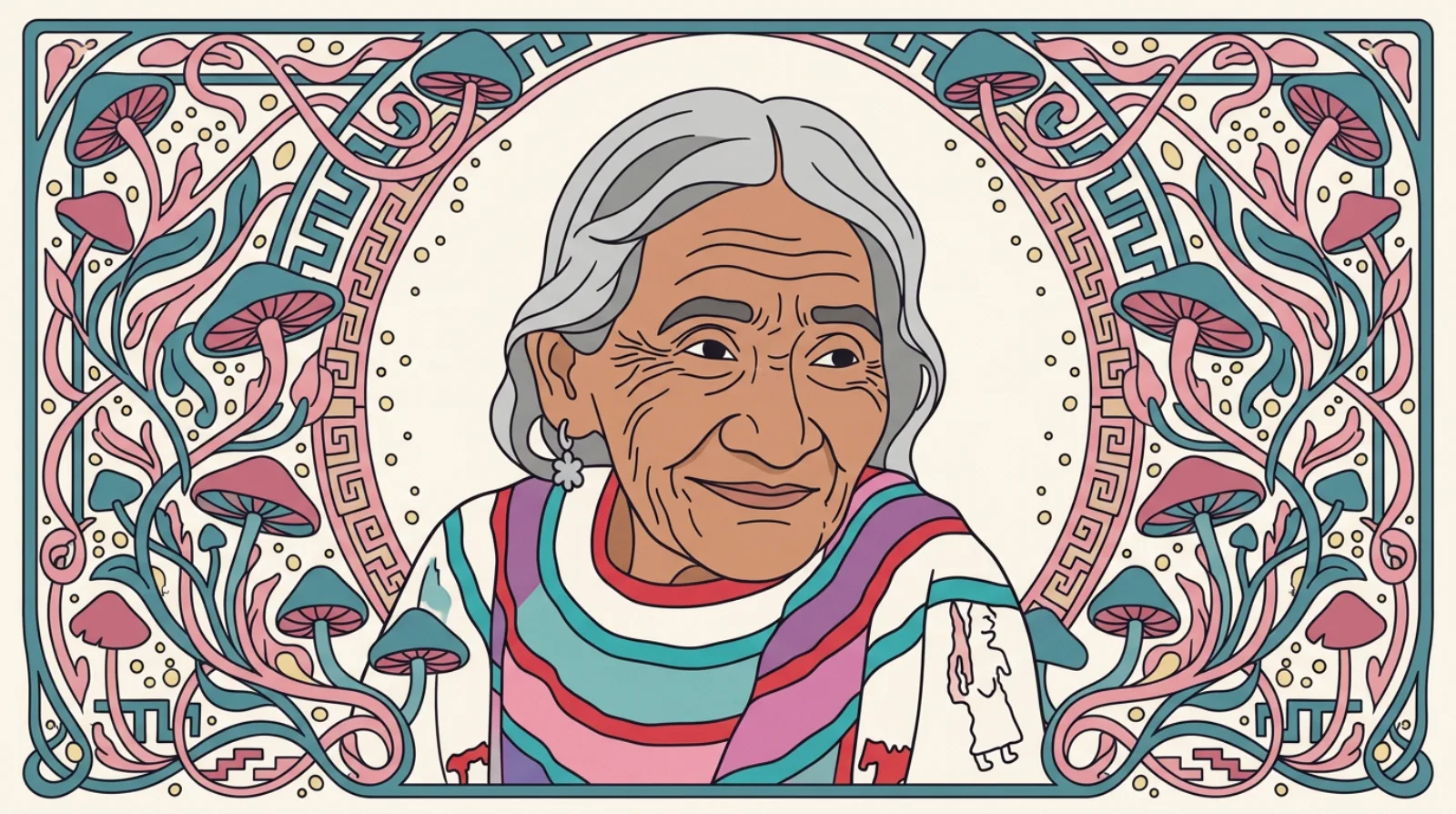
Maria Sabina and the Sacred Children of the Mountain
The story of Maria Sabina, the Mazatec curandera who shared the sacred mushroom with the modern world — what she taught, what happened next, and what her tradition asks of us in return.
Read →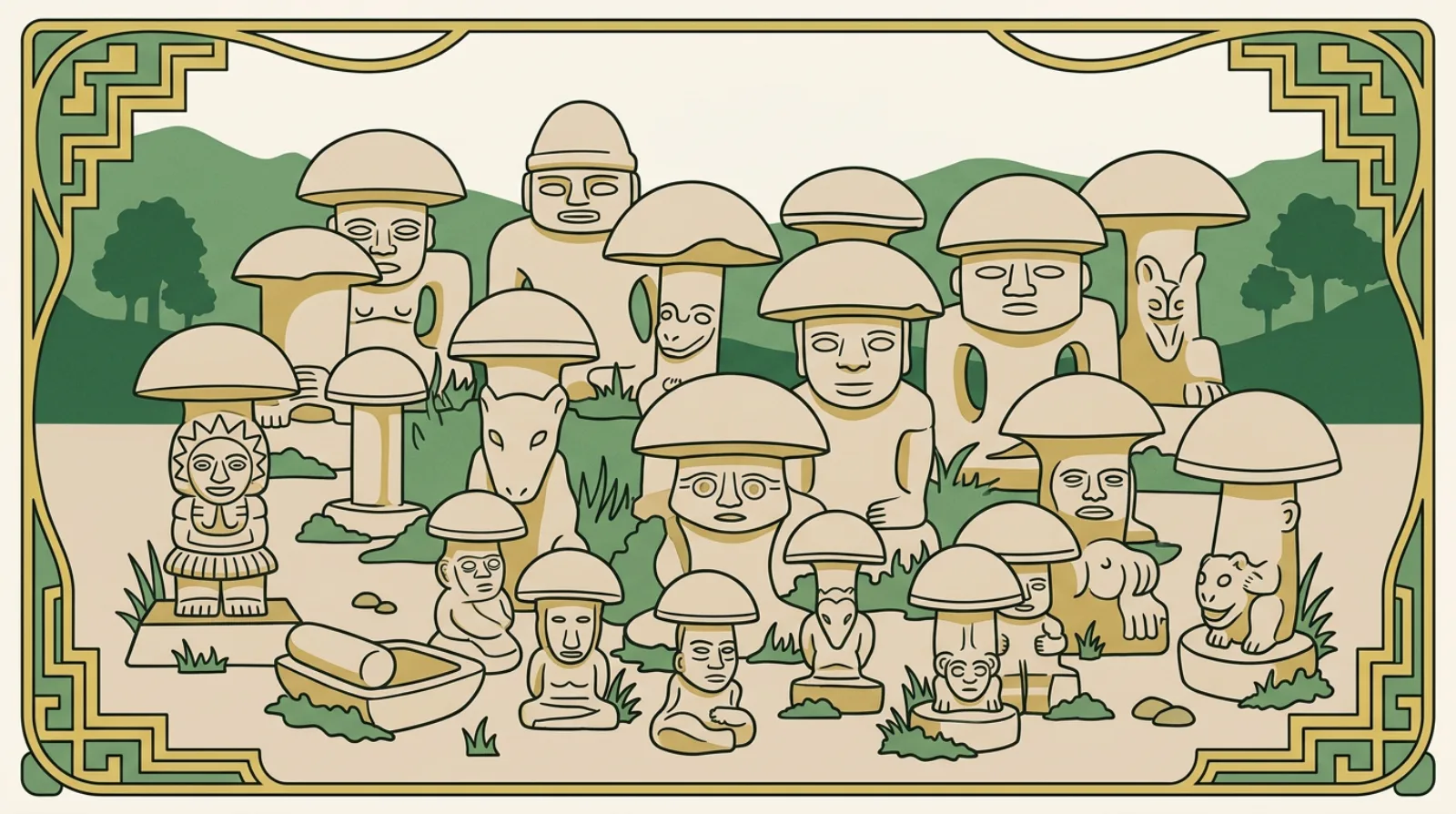
The Mushroom Stones of the Maya: What the Stones Say and What They Don't
In the highlands of Guatemala, archaeologists have found hundreds of small carved stones shaped like mushrooms, some of them nearly three thousand years old. This is what the stones are, what scholars have argued about them, and why the question is still open.
Read →
The Origin Story: Why I Built This (A Founder's Account)
A first-person account from the founder of The Microdose Movement about why this exists — the wound, the shadow work, and the realization that the tools needed to be in one place.
Read →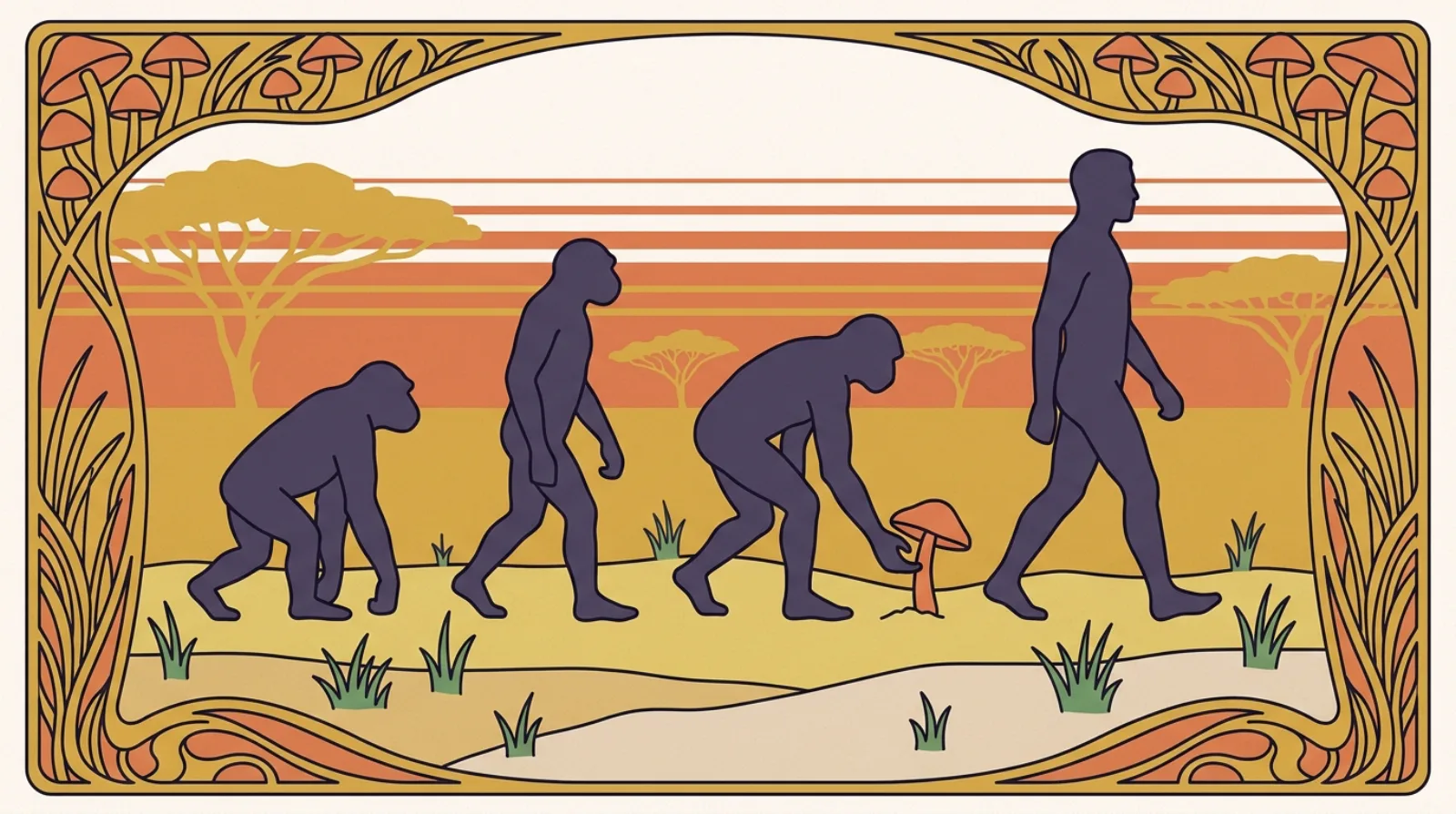
The Stoned Ape Theory: What the McKennas Actually Proposed and Why It's Still Debated
Terence and Dennis McKenna proposed that psilocybin mushrooms played a role in early human cognitive evolution. The idea is famous, poetic, and not settled. Here is what they actually said, what the evidence supports, and what it doesn't.
Read →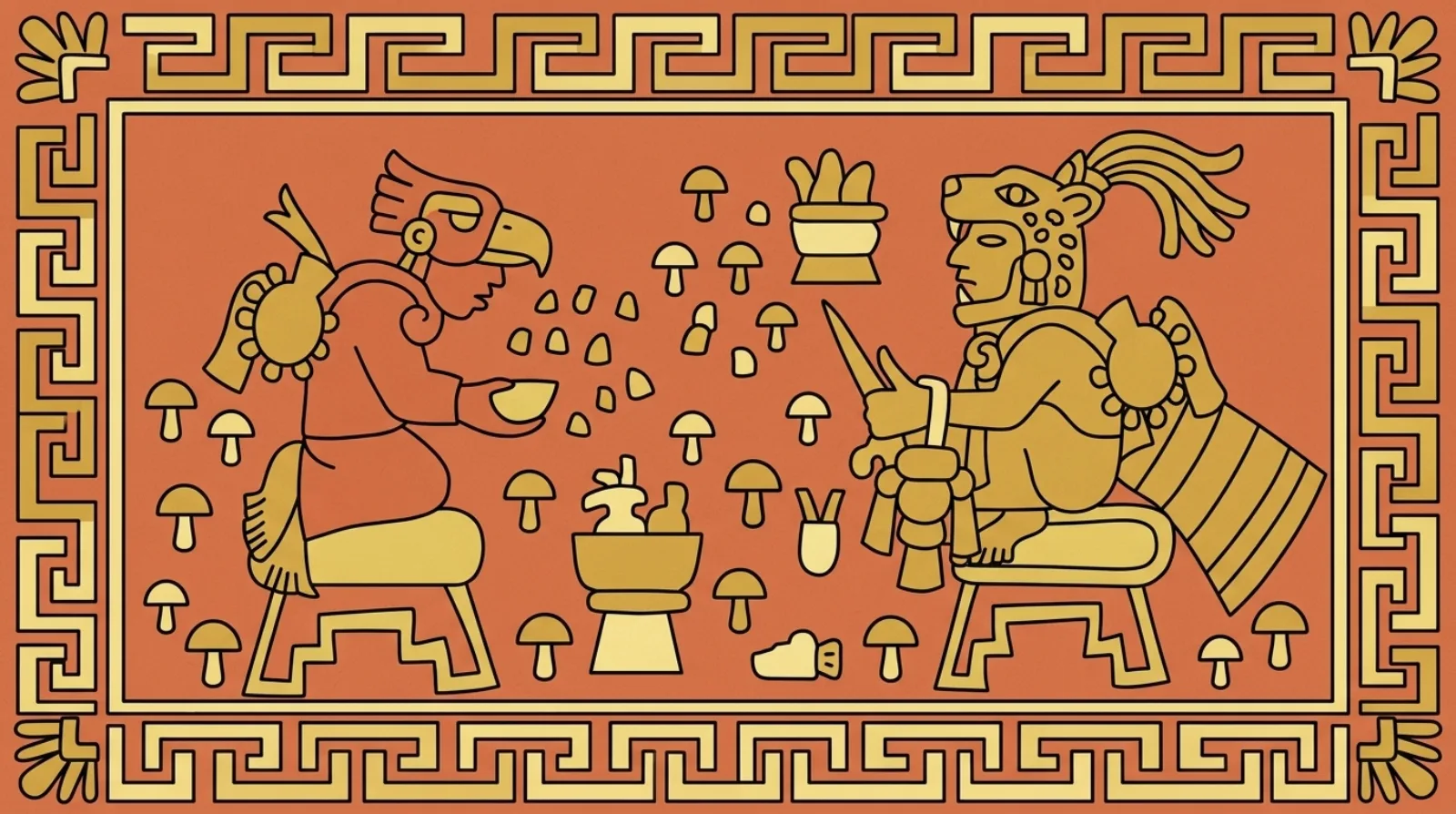
Teonanácatl: The Nahua Name for the Sacred Mushroom
Before Western science named psilocybin, the Nahua peoples of central Mexico had a word for the mushroom and a practice that surrounded it. This is what the colonial record shows, what it leaves out, and why the name still matters.
Read →
The Suppressed Decade: How Modern Psychedelic Research Got Erased
How decades of legitimate psychedelic research were shut down by the 1970 Controlled Substances Act, what was lost, and how the science finally came back.
Read →
Seeking the Magic Mushroom: The 1957 Article That Opened a Closed Door
In May 1957, a Vice President at J.P. Morgan published a seventeen-page photo essay in Life magazine about a Mazatec mushroom ceremony in a small Oaxacan village. It reached millions of readers and broke something that had been held carefully for centuries. This is what happened, what it meant, and what it still means.
Read →
Why Now: The Cultural Window for Root-Cause Healing
Why this moment is the window for serious conversations about microdosing and root-cause healing — the convergence of science, cultural readiness, and personal desperation that makes the present different.
Read →
The Manifesto
What we stand for
by Kecho, founder
Origin & Wound
I was deep in the nightlife industry. Festivals every weekend, numbing myself, no sense of purpose. Just stuck in the loop of the material world.
At 21, I had my first mushroom experience with college friends. For a long time I called it a terrible trip. But looking back, it wasn’t terrible at all. It was the shadow work revealing itself; the dark side, the stuff I’d been carrying, showing up for the first time. I just didn’t have the tools or the setting to understand what it was trying to tell me. I wasn’t ready. So I shut the door and told myself I’d never touch them again.
At 26, I hit a wall. Something had to change. I took a leap of faith. Joe Dispenza, personal growth work, and eventually found my way to ceremony. Intentional. Emotional. A completely different setting. And for the first time, I was actually able to unpack the things I’d been processing: childhood trauma I didn’t even know was stopping me from feeling, from becoming who I was supposed to be.
That’s when I realized the first experience at 21 wasn’t a mistake. It was the lesson arriving before I had the language for it. The ceremony at 26 gave me the container to finally sit with what had surfaced years earlier. Both experiences were necessary. One showed me the root. The other gave me the tools to pull it up.
The healing compounded. The numbing stopped. Purpose emerged.
I built this because those tools didn’t exist in one place. Products that actually get to the root. Education that cuts through the stigma. A community where you can talk about this honestly, including the hard parts, especially the hard parts. The shadow work isn’t the bad trip. It’s the whole point.
What’s Broken
The system is rigged. The same institutions that gave us the food pyramid manipulated society toward pharmaceutical dependency, suppressed psychedelic research for decades, and created stigma through fake news and government lies. Psychedelics get to the actual root issue, and that threatened everything they built.
Most people are numb and don’t even know it. They’re managing symptoms: five coffees a day, SSRIs that blunt instead of heal, scrolling to avoid feeling, staying busy to avoid sitting with themselves. They know something is off but can’t access what’s underneath. Unprocessed trauma they don’t even know is there. And the system that’s supposed to help them was designed to keep them coming back, not to graduate them out.
That’s the problem nobody recognizes as a problem: most people have never felt their actual baseline. They think numb is normal.
The Belief
Chemically, microdosing supports neuroplasticity. It helps your brain form new connections, break old patterns, access more of itself. The research is real and it’s growing.
But what it actually does is bigger than chemistry. It’s a catalyst. It opens a door you didn’t know was closed. It helps you feel again. Feel everything. It connects the neurons so that the practices you’re already doing (breathwork, meditation, journaling, movement, nature) actually land deeper. It surfaces the stuff that was buried: the trauma, the patterns, the stories you’ve been running on without knowing it.
What it makes possible: a real relationship with yourself. Not managed. Not medicated. Not numbed. The ability to process what’s underneath and become the best version of yourself, not through a capsule alone, but through the capsule as a catalyst paired with the work.
And then the part most brands won’t say: you outgrow it. You reach your new baseline and you don’t need the catalyst anymore. That’s the whole point.
Why Now
The stigma is cracking. Decades of suppression are finally giving way. Johns Hopkins, Imperial College London, the FDA granting breakthrough therapy designation. The research that was always there is finally being allowed to exist publicly.
At the same time, people are hitting a wall with the conventional playbook. SSRIs. Adderall. Five coffees. Therapy that talks in circles. An estimated 9.5 million US adults are already microdosing, most of them DIY: grinding their own, inconsistent dosing, no standardization, no guidance.
Culturally, there’s a hunger for something real. People are exhausted by wellness that’s performative and healing that’s surface-level. They want root cause, not symptom management. They want evidence, not vibes.
The science, the cultural readiness, and the personal desperation are all converging at the same moment. This isn’t early anymore. This is the window.
The Misunderstanding
The biggest misconception is that microdosing is just “taking a little bit of shrooms,” that there’s nothing behind it. No protocol, no practice, no purpose.
And look, I use mushrooms recreationally too. I’ll take them at a festival to dance, to be present, to enhance the experience. And part of that intention is what I’m not doing: I’m not drinking, I’m not consuming substances that harm me. That’s still intentional. Recreational and intentional aren’t opposites. You can enjoy the experience and still be choosing something better for yourself.
The real misunderstanding is that mushrooms are one thing, that they’re either medicine or party drugs. They’re neither and both. It depends on the person, the setting, and the intention. A ceremony is different from a festival is different from a Tuesday morning microdose. All of them can be intentional. None of them deserve judgment.
The other misconception is the stigma itself, that mushrooms are dangerous. The same government that told you they were dangerous suppressed the research proving they weren’t. The research was always in the people. We just made it easier to access.
And then there’s the fear that you’ll become dependent. We built the opposite. Our products are designed to be outgrown. Designed to be deleted. The goal is graduation, not subscription.
Who This Is For
A person stuck in a cycle. Pharmaceuticals, caffeine, numbing, addiction, or just a quiet sense of lost purpose. They’ve tried the conventional routes. They know something is off but can’t access what’s underneath.
They range from someone on SSRIs who wants to feel again, to a biohacker chasing neuroplasticity, to someone watching a parent face cognitive decline and feeling helpless, to someone who just wants to quit the five-coffees-a-day hamster wheel.
What they share: a sense that something is blocking them from being the best version of themselves, but they can’t see what it is. They’re not broken. They’re buried. There’s unprocessed stuff underneath that nobody taught them how to reach.
They’re searching for something that actually works. Not another app. Not another pill. Not another influencer telling them to meditate harder. Something that gets to the root.
What We Stand Against
We reject a system that suppresses root-cause healing to sell symptom management.
We reject the idea that science and spirituality have to be separate. The best breakthroughs happen when both are in the room. We’re evidence-based, but we’re not cold about it. Ceremony changed my life. Breathwork changed my life. The research validates what indigenous communities have known for centuries. What we reject is performative spirituality, the kind that uses big words with no substance behind them, that sells aesthetics instead of actual practice. If it sounds deep but doesn’t hold up to a single follow-up question, it’s not this.
We reject dramatic mushroom stories told for likes. People who portray mushrooms sensationally for clicks are actively hurting this movement. They feed the exact stigma we’re trying to dismantle.
We reject dependency as a business model. Any brand that needs you to stay sick to stay profitable is part of the problem. We built this to make ourselves unnecessary.
Read the full breakdown of what we reject →
The Practice
Taking a capsule doesn’t make you part of the movement. Living the practice does.
The capsule is the catalyst. The movement is what you do with the door it opens: breathwork, meditation, movement, journaling, nature, sleep, ceremony, self-development work. The catalyst connects the neurons. The practices rewire the patterns.
Someone who microdoses takes something. Someone in the movement is doing the work: processing what surfaces, sitting with discomfort instead of numbing it, building rituals that compound over time. They’re in the community talking honestly about what came up. They’re not chasing a feeling. They’re building a baseline.
And the ultimate marker: they heal what needed healing. They reach their new baseline. Maybe they still microdose, maybe they don’t — but the point is they don’t need it anymore. The product served its purpose. What stays is the community, the practices, and the person they became through the work. That’s the movement. Not customers who depend on a capsule forever. People who got to the root, healed, and kept growing.
The Vision
In 10 to 20 years, the stigma is gone. Not just reduced — gone. Mushrooms are understood for what the research has always shown: one of the most effective tools for neuroplasticity, trauma processing, and mental health that nature ever produced.
People access root-cause healing instead of managing symptoms for life. Families have conversations about mental health that start with honesty instead of shame. The pharmaceutical treadmill is an option, not the default. Psychedelic-assisted protocols are integrated into how we actually heal, alongside therapy, practice, and community.
Kids grow up knowing that feeling numb isn’t normal. That there are tools to process what’s underneath. That asking for help isn’t weakness.
And the Movement? Ideally, we have made ourselves unnecessary for most of the people we have served. They reached their baseline. They graduated. That’s what winning looks like.
The Ask
Feel it. Sit with it. Don’t scroll past it.
If something in this resonated, if you recognized yourself in the numbness, the cycle, the quiet sense that something is off, that recognition is the first step. Don’t ignore it.
Take the quiz. Find out where to start. Apply to join the community. Start learning. Start the practices: breathwork, meditation, journaling, movement, nature. And when you’re ready, try the catalyst.
But commit to the work, not just the product. This isn’t a pill you take and forget. It’s a door you walk through. The ask is simple: start the practice, do the work, get to the root — and when you reach your baseline, graduate.
Limitless by nature.
— Kecho
The Microdose Movement is an educational community, not a medical provider. Nothing in this manifesto is medical advice. If you are in crisis, please contact your local emergency services or a crisis helpline.
Where to go from here
What We Reject
The lines we draw
You can learn what a Movement believes by reading what it refuses.
We Reject Dependency as a Business Model
Why most wellness brands need you to stay sick to stay profitable, and why The Microdose Movement was built as an education community with no products to sell.
Read →We Reject Mushroom Stories Told for Likes
Why dramatic mushroom trip stories told for social media engagement are actively hurting the movement, and what responsible storytelling looks like instead.
Read →We Reject Performative Spirituality
Why much of what passes for modern spirituality is performance rather than practice, and why The Microdose Movement insists on the difference.
Read →We Reject Symptom Management Dressed Up as Healing
Why most modern medicine treats symptoms while leaving the root causes intact, and why The Microdose Movement was built around the opposite principle.
Read →We Reject the False Split Between Science and Spirituality
Why the modern wellness world's split between cold clinical science and warm spiritual experience is a false choice, and why The Microdose Movement insists on both.
Read →
